

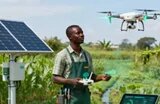
Mainstreaming Clean Innovative Technologies into Nigeria's Agricultural Sector

Nigeria’s agriculture is the backbone of rural livelihoods but continues to face low productivity, high post-harvest losses, and unsustainable energy dependence. Many value-chain processes, drying, milling, irrigation, and preservation, still rely on outdated, inefficient, or polluting systems. These “dirty” agricultural practices not only limit profitability but also worsen greenhouse gas emissions, deforestation, and rural pollution.
This study assesses how clean and innovative technologies, such as solar dryers, cold-storage systems, biogas digesters, mini-grids, and solar irrigation, can transform Nigeria's agri-food system by reducing waste, easing labour burdens, increasing profits, and driving a just agricultural and energy transition. Using a mixed-methods, participatory approach across major agro-ecological zones, the research draws on desk reviews, field surveys, interviews, and stakeholder consultations to identify current gaps, assess the socio-economic and environmental benefits of cleaner alternatives, and recommend feasible strategies for scaling their adoption nationwide.